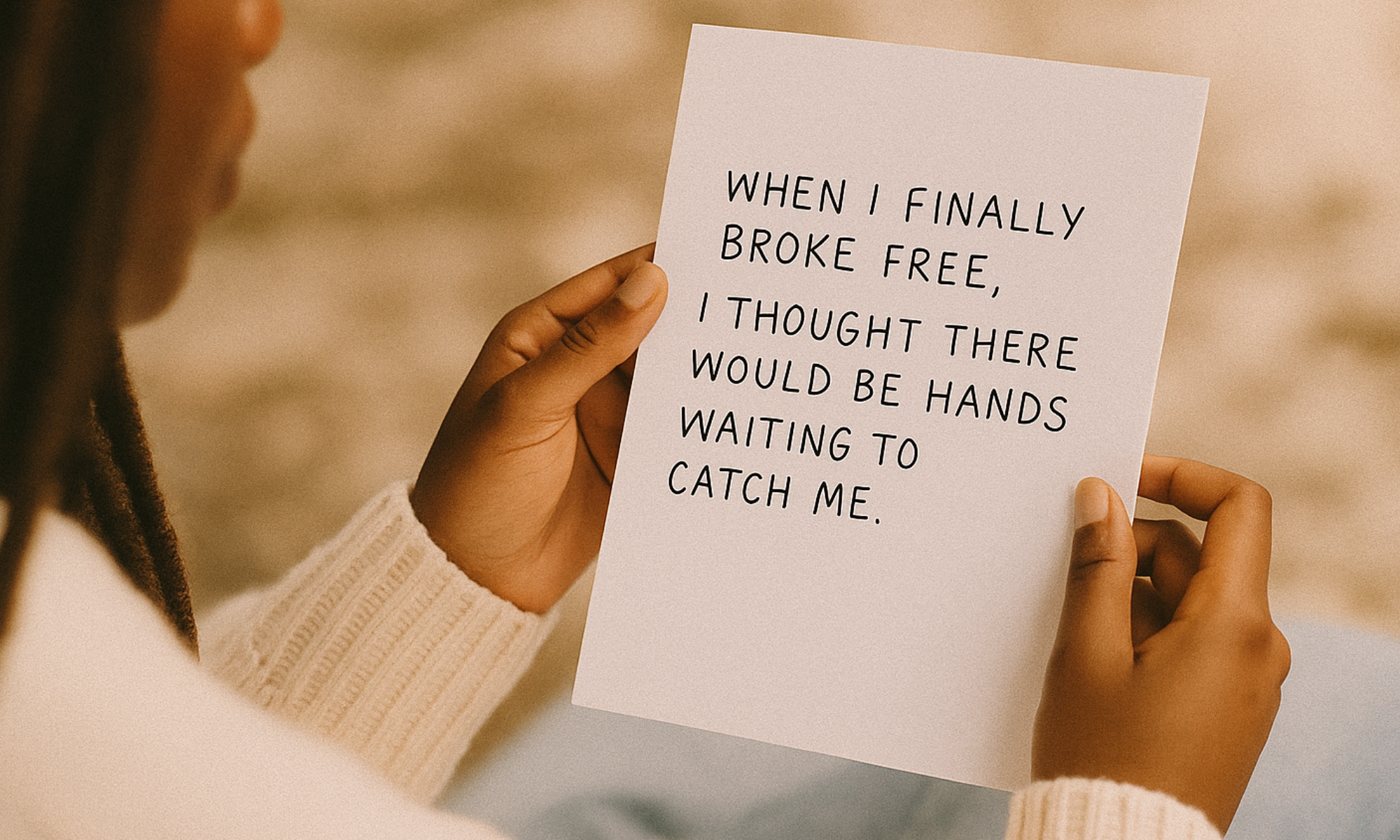
“… But his family, the ones who once called me sister, daughter, friend… They vanished.”
Poetry as a language of healing
“Women should be able to feel safe…” That’s how our first ARTiculating HerStory reflection began; a reminder that language holds power: to name, to challenge, to heal. When we first explored collage art as a medium, we discovered that stories can live beyond words: in colour, texture, and image. Yet even then, something quietly stirred beneath the surface: the unspoken need for words to return, not as wounds reopened, but as truths reclaimed.
Poetry became that bridge between silence and speech, between image and identity. It invited a deeper honesty, one that could hold both pain and possibility in the same breath. Where collage allowed for dreaming and escape, poetry offered confrontation and release. It asked the women not just to imagine new beginnings, but to face what had been, to write from a raw and rediscovered place of self.
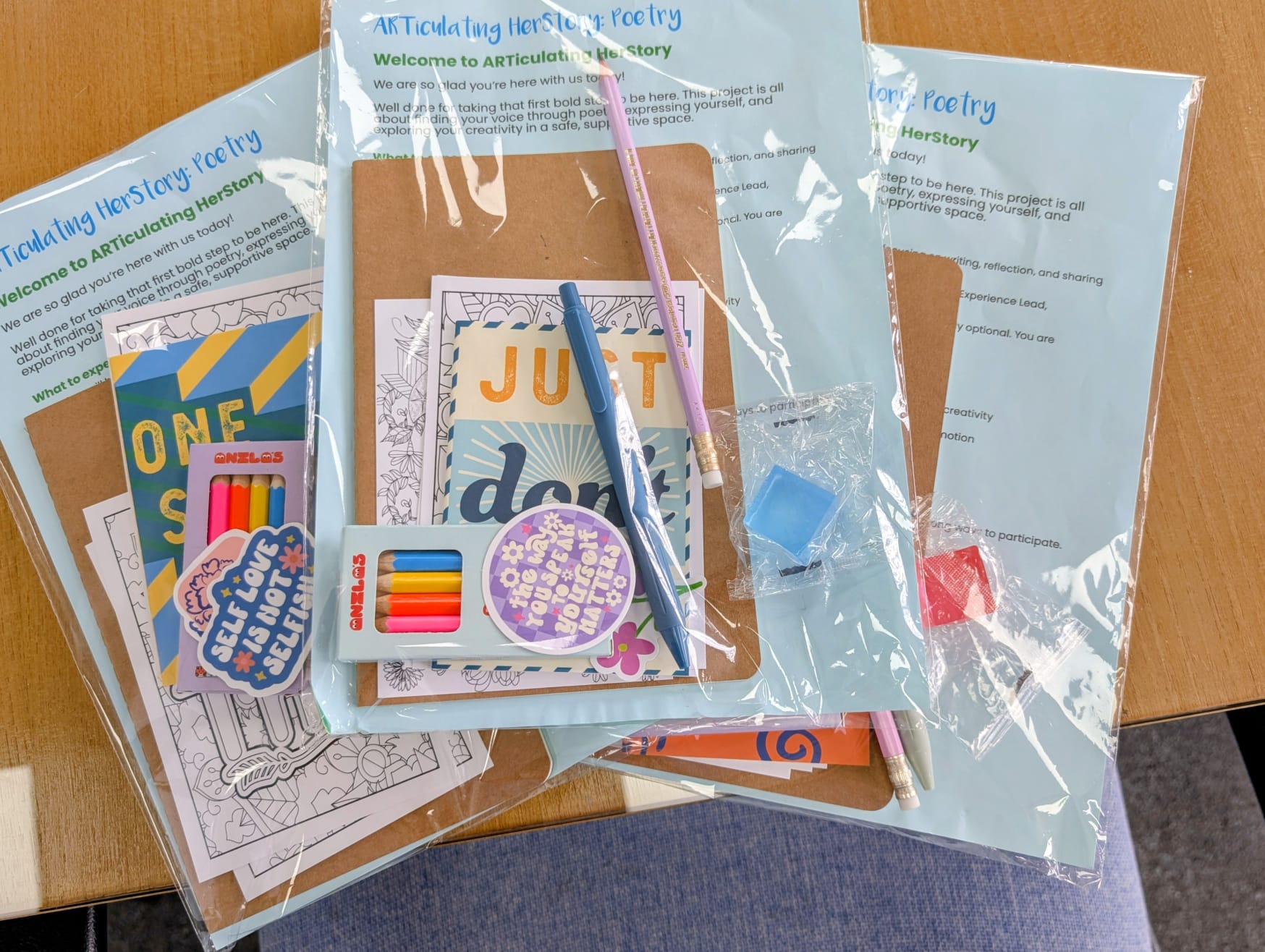
The tools: paper, pencils, prompts, and permission to speak. Creative packs filled with prompts, colouring sheets, pencils, and gentle affirmations, thoughtfully designed to make every woman feel safe, supported, and inspired to write her truth.
The shape of expression
The ARTiculating HerStory poetry edition unfolded across three sessions: two creative writing workshops and a final rehearsal ahead of live readings at Wolverhampton Grand Theatre. Survivors took part wholeheartedly, showing up with openness and courage as though they had been waiting for this exact moment to exhale.
Each session was carefully crafted to hold both creativity and care. Co-facilitated by local poet Chauntelle Madondo, we balanced artistic exploration with emotional safety. Together, we began gently: “Say your name and catch these compliments,” a joyful icebreaker that set laughter and affirmation in motion. From there, we built a collaborative story about a brave little dog named Snowbell, a symbolic guardian protecting children from dragons and monsters on a beach. It was light-hearted, but it reminded us that storytelling can hold safety and strength in the same frame.
There was no resistance, only release. What we witnessed were quiet, powerful breakthroughs: moments where thought became word, where silence turned into sound. And when a line landed deeply, the room filled with the soft rhythm of finger-clicks, our collective way of saying, we see you, we feel that too.
By the end of that first session, the energy had shifted. One woman who had described herself as “closed” at the start said she now felt “open and hopeful.” Through prompts about joy — a sister’s engagement, the birth of a son — the women found not only their voices, but also a tender reminder that healing and happiness can coexist.
Kintsugi: beauty in the broken
Even when the sessions paused between in-person meetings, the connection continued. Worksheets and check-ins bridged the silence, creating space for reflection. Looking back, a single, uninterrupted day might have offered smoother continuity, but even so, the women stayed present, engaged, and deeply rooted in the process.
This second session drew inspiration from Kintsugi, the Japanese art of repairing broken pottery with gold, a metaphor for resilience and transformation. The women were encouraged not to write about events directly, but about how those moments felt: the colours, textures, and sensations that still echoed in memory.
Through this process, they crafted “I am…” affirmation poems, gentle declarations of strength, compassion, and survival. These became the golden seams in their creative vessels. Each woman shaped her story at her own pace, choosing what to reveal and what to hold close.
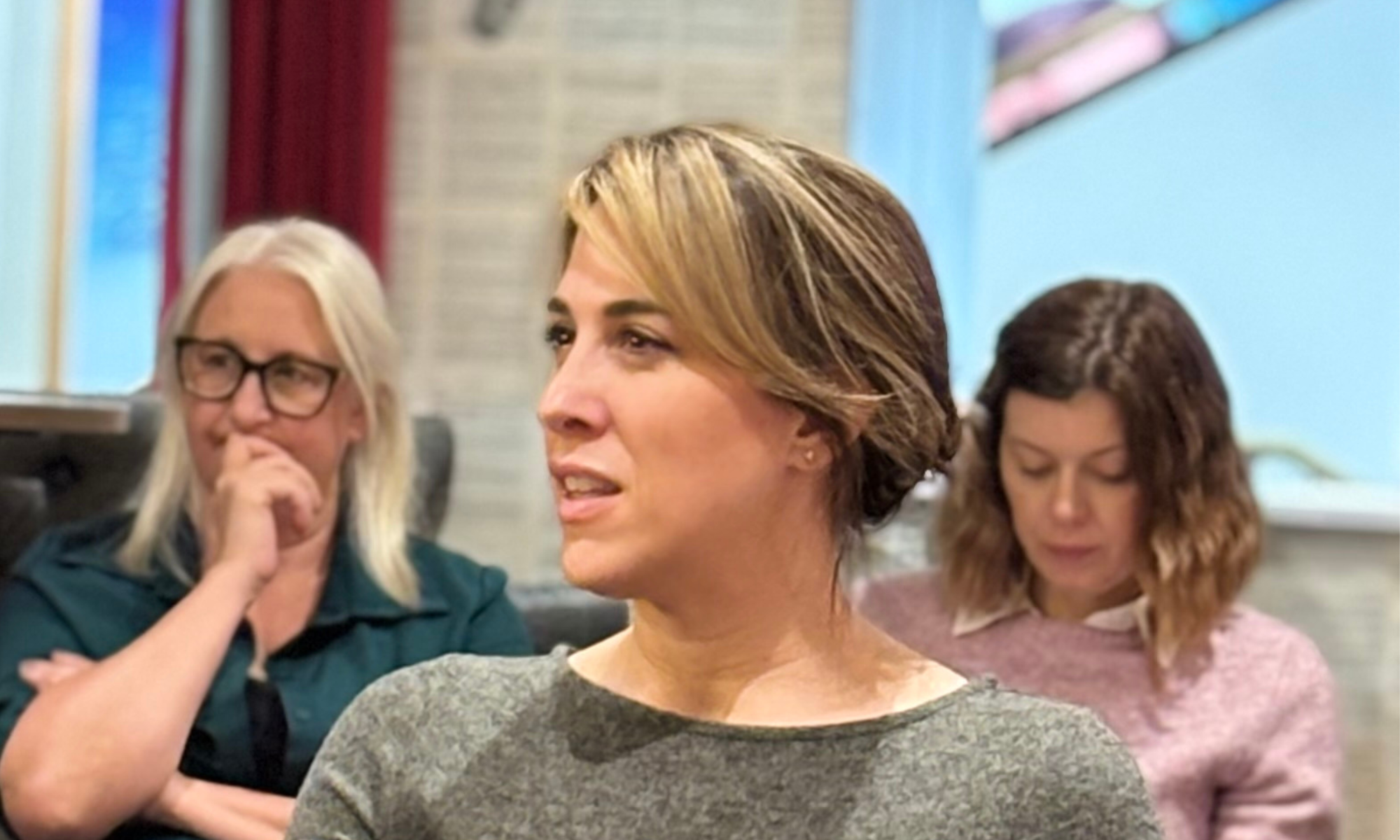
An intimate audience including staff and carefully selected partners.
From silence to sound
The poetry evening at Wolverhampton Grand Theatre became a defining moment in the ongoing ARTiculating HerStory journey. We are deeply grateful to the team at the Grand for opening their doors and their hearts to us. Their generosity gave survivors a stage not defined by circumstance, but by creativity and courage. It mattered that it happened there: a space of culture and belonging that affirmed, in the most visible way, that these voices belong there too.
Each poem carried its own truth. One spoke of loneliness after freedom, of how, when the cage finally opens, the world sometimes walks away. Another captured the defiant beauty of survival, like a rose growing through concrete. Together, they revealed the full spectrum of what it means to live, to lose, and to begin again.
Then came Face Me After the Fade, performed by our CEO Laura Rogers. Her piece echoed through the room with honesty. It reminded us that healing continues long after the bruises fade, that survival is not the end of the story, but the beginning of becoming whole. Read her reflections on the event here and her poem, Face Me After The Fade can be found here.
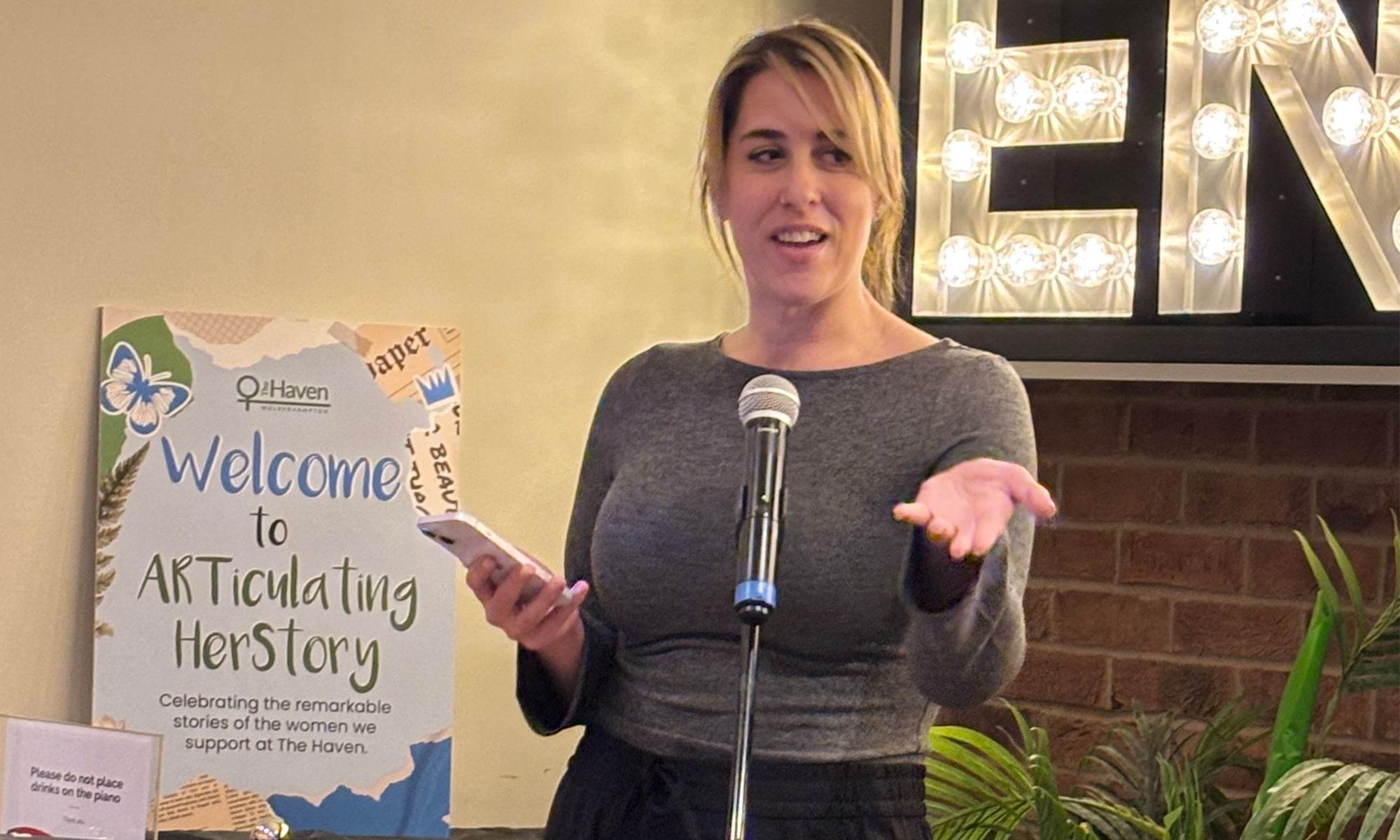
Our CEO Laura Rogers reciting her poem “Face Me After the Fade,” a raw and resonant reminder that healing is a journey that lives beyond survival.
The power of poetry
Poetry offers something no other language can. It allows fragments, pauses, contradictions, the natural rhythm of trauma and recovery. It doesn’t demand linear storytelling or polished endings; it welcomes the unfinished, the in-between.
For survivors, that freedom is everything. Poetry becomes a mirror where they can decide what to show and what to keep sacred. It is both personal and communal, a bridge between isolation and connection. Writing, reading aloud, hearing one’s own voice received without judgment are profound acts of reclamation. In that sense, poetry is not just art. It’s translation; turning pain into possibility, fear into form, silence into song.
The theatre as a sanctuary
Sharing these poems at Wolverhampton Grand Theatre was deeply symbolic. The theatre is a space often associated with prestige and belonging, and on that day it became a stage for voices that are too often unheard. It said, these stories belong here too.
For the women, it was their first time seeing themselves represented in such a setting. Standing beneath the ENCORE lights, they weren’t defined by what had been done to them, but by what they had created. Their presence challenged the silence that surrounds abuse and replaced it with language that demanded dignity and visibility.
For the audience, it was more than an event. It was an invitation to listen with empathy, to understand that these are not merely “stories of abuse” but works of art filled with resilience and humanity.
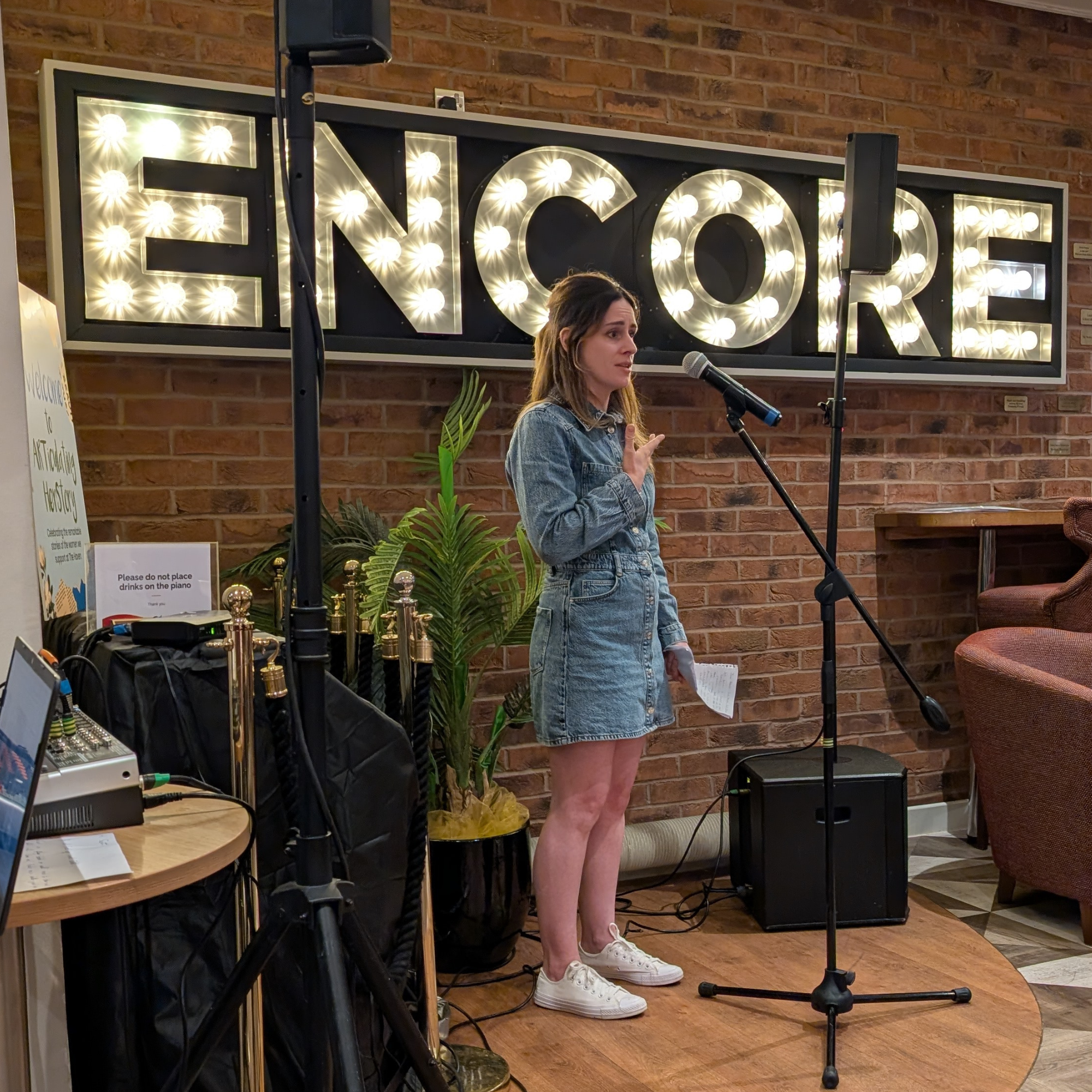
“The clatter of pans and women’s kitchen conversations, the laughter and hurried footsteps of the children. The memories, the hope, and immense courage inside all of them.” – Our Communications Lead Jade Beddington shares a poem about her time at The Haven and the work that we do.
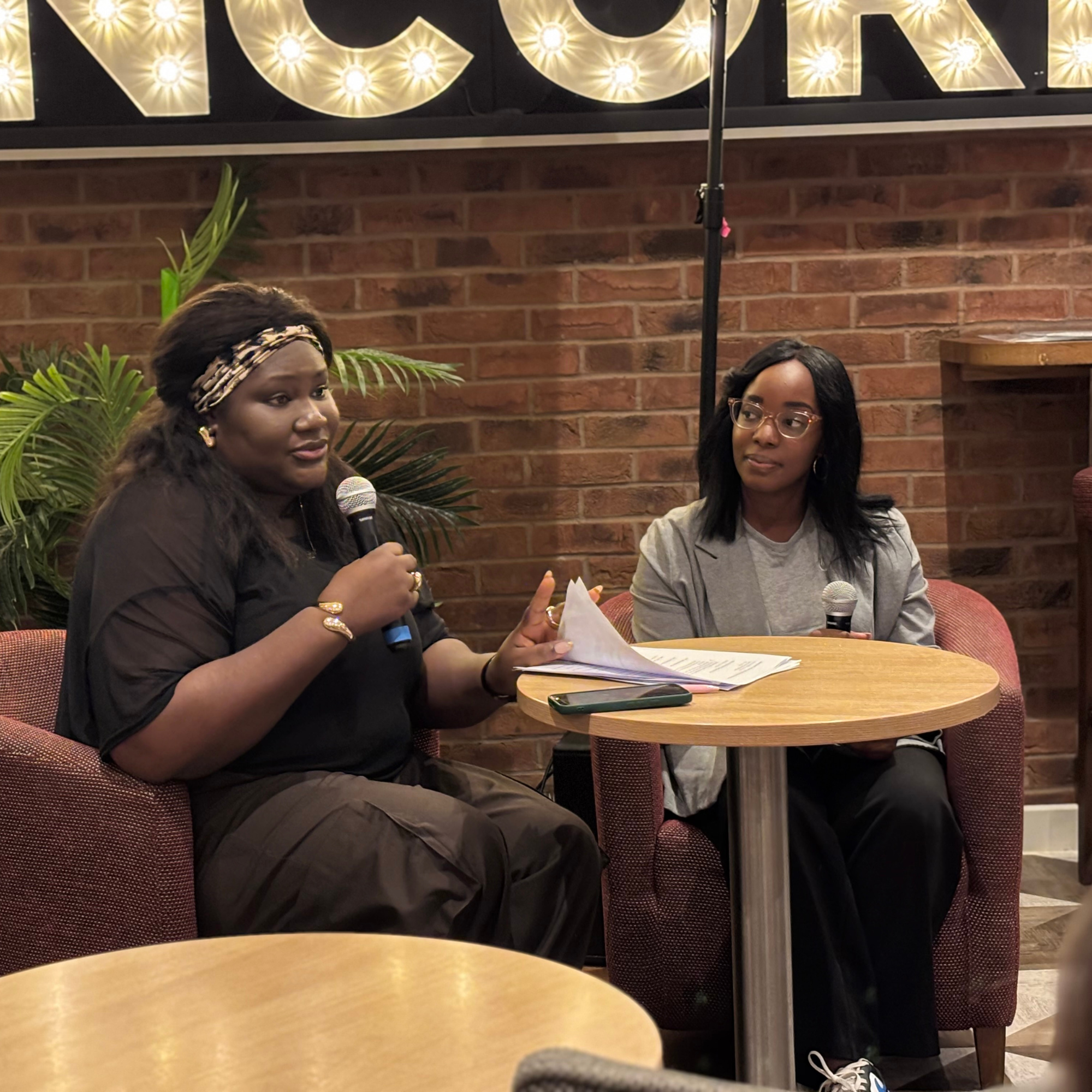
“Data informs. Stories transform.” – In conversation, our poet facilitator and Lived Experience Lead explored how creativity can turn statistics into stories that move hearts, minds, and policy, humanising survivors and reminding us that behind every statistic is a story that deserves to be heard.
Forty Free
Facilitating these sessions alongside Chauntelle invited me to look inward, to face my own silences. As the newly appointed Lived Experience Lead, the experience became a mirror for the kind of practice I want to nurture: one grounded in empathy, co-creation, and creative courage. It reminded me that holding space for others isn’t just about guiding, it’s about listening deeply, being present, and recognising that healing is a dialogue, not a destination.
Bearing witness to the women’s honesty, their courage to write through the ache and still find beauty, reminded me of the power of naming what once felt unspeakable.
It was during this time that I revisited my own poem, Forty Free, a piece born from confrontation and clarity. In it, I explored the ways fear lingers long after the harm has ended; how it becomes its own captor, echoing the abuser’s voice long after they’ve gone. Forty Free became my reckoning with that legacy, a conversation between who I was and who I am becoming.
Writing it felt like letting go of something I didn’t know I was still holding. It reminded me that healing is not about erasing what happened, but about reclaiming authorship of the story and choosing, line by line, to let courage speak louder than fear.
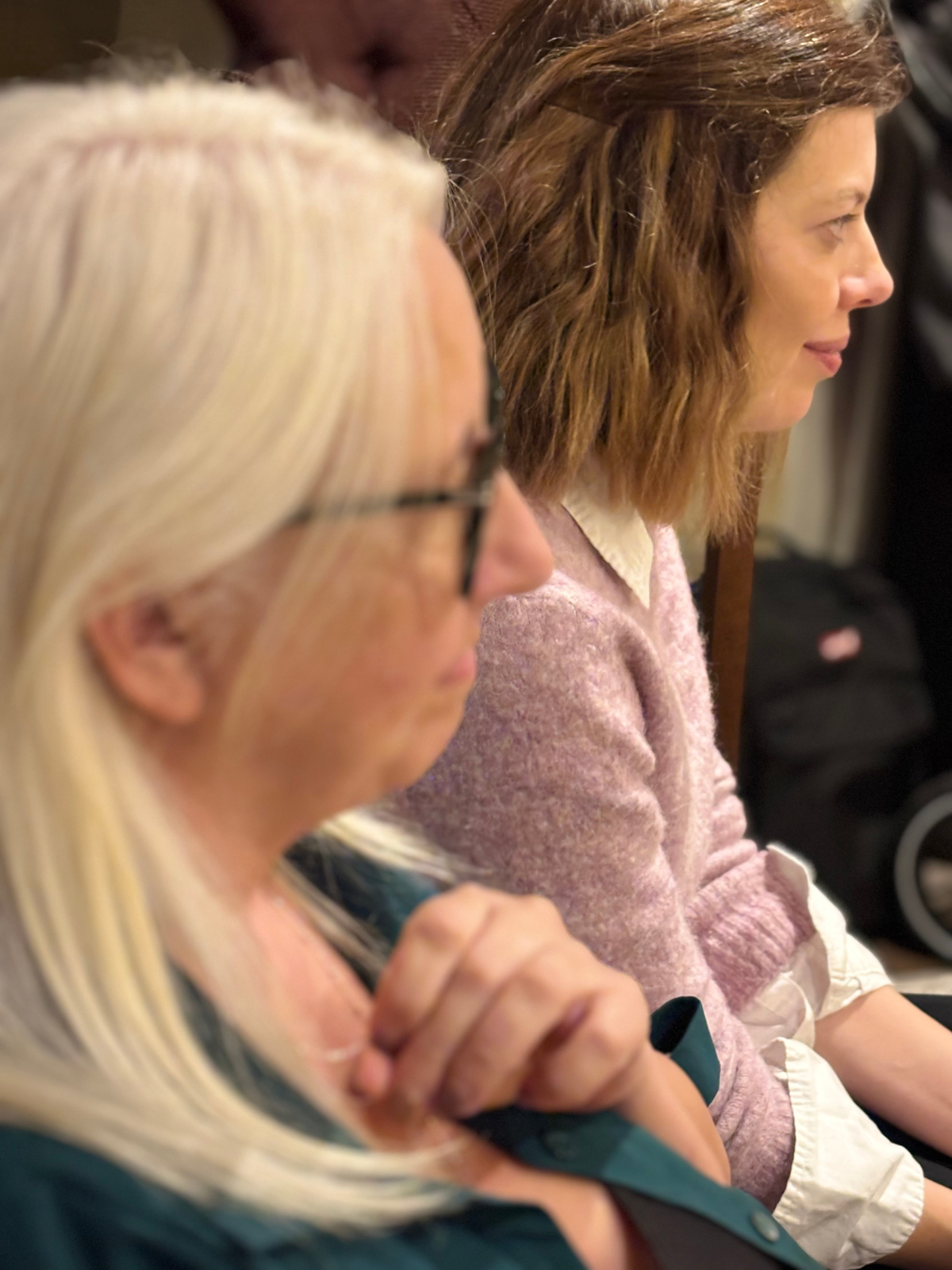
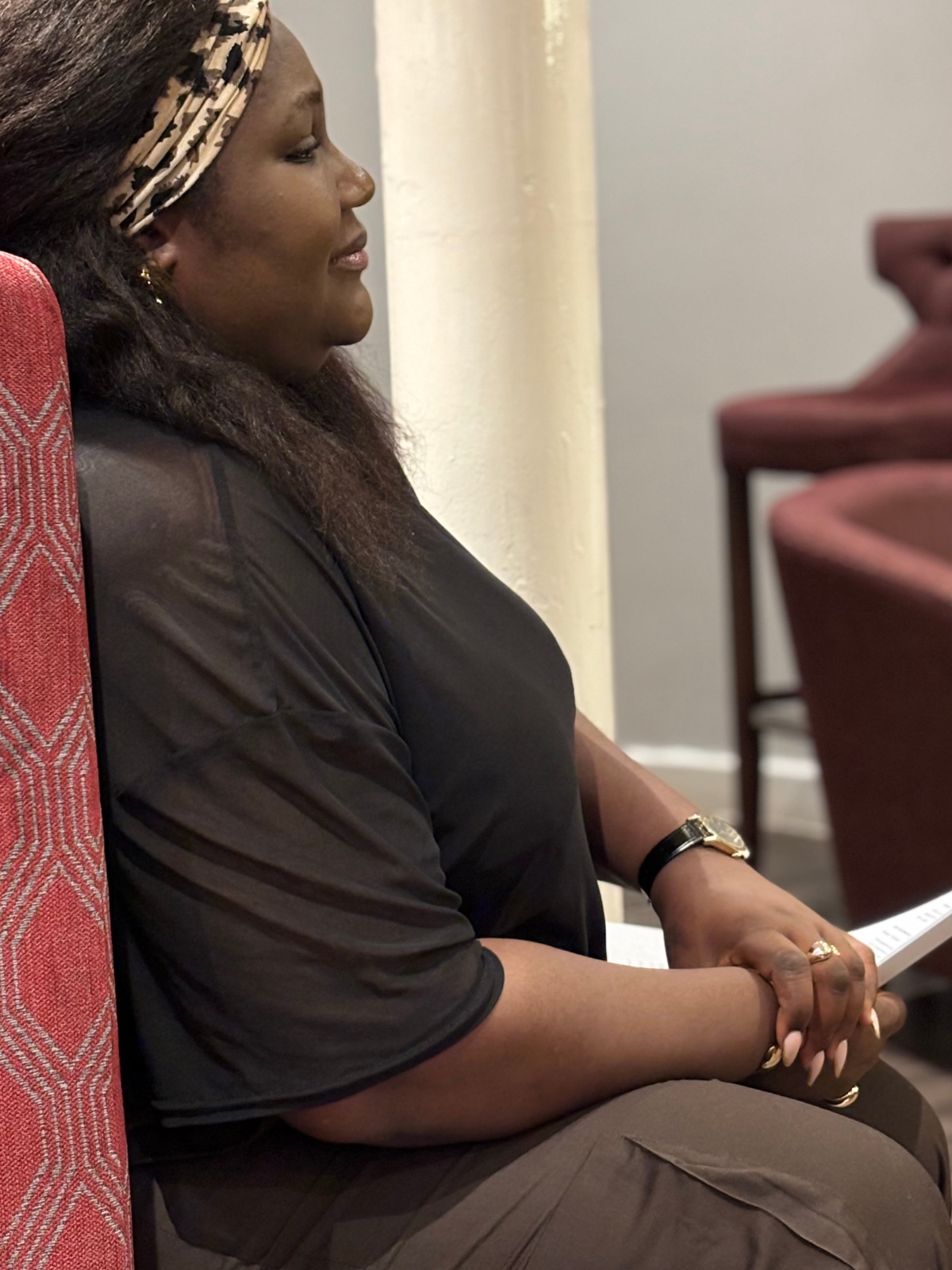
Members of The Haven team listened intently as survivors shared their poetry. Moments like these remind us of the importance of creating space for lived experience, where stories are not just heard, but truly felt.
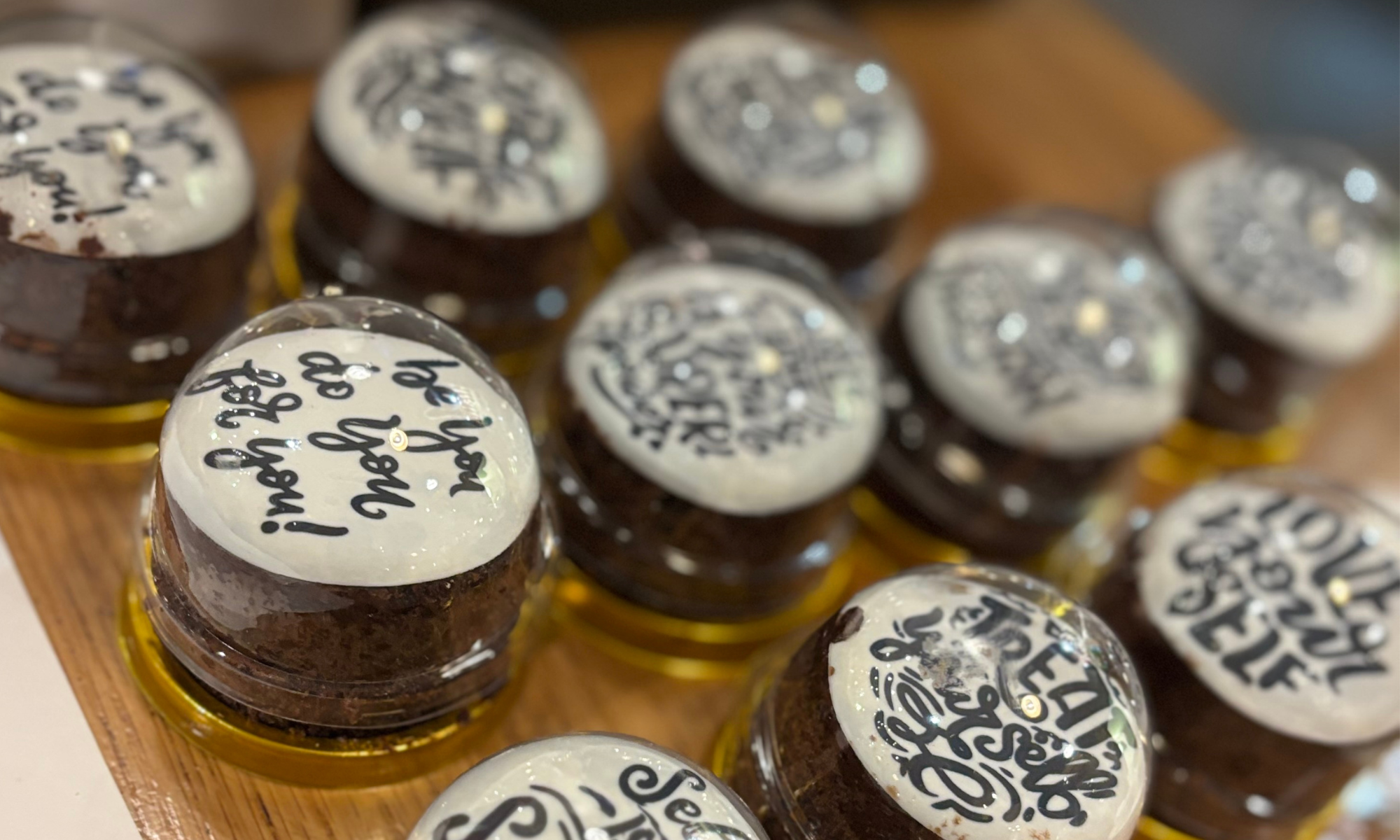
Healing can be heavy so we made sure to end with a little sweetness. Everyone received a chocolate or vanilla cupcake decorated with positive affirmations and gentle reminders to pause, breathe, and care for yourself. Alongside these trauma-informed treats, we shared simple tips on safeguarding wellbeing and decompressing after holding the weight of difficult stories.
Continuing the journey
ARTiculating HerStory continues to evolve, from image to word, from art to activism. This poetry edition has shown that healing isn’t just about speaking; it’s about rediscovering oneself in the process of doing so. Each poem written, each line spoken, is a testimony to the transformation that can happen.
This is not the end of the story, but another beginning. We’ll be continuing this journey at Wolverhampton Literature Festival 2026, hosting an open mic event that widens the circle and welcomes new voices into the conversation.
Until then, may we keep making space for stories that heal, words that restore, and women who rise, again and again, into their truest selves.